Dishonesty in a relationship is a big letdown because it breaks your trust in your partner. It also makes you wary of believing your partner going forward. Knowing how to spot a liar in a relationship is very necessary. So, what are the signs of dishonesty in a relationship?
The signs of dishonesty in a relationship include keeping secrets, telling half-truths, excessive apologies without change, sudden password protection, feeling anxious about something, and an apparent lack of accountability from your partner. These signs all show that there are inconsistencies in your relationship.
Noticing dishonesty in your relationship is a significant letdown. Being lied to by someone you love and cherish can do a number on you. It destroys any trust and reliance you have in that person. It may feel like a weight on your shoulders and a burn in your chest.
Regardless of the heartache, knowing it’s when your partner is dishonest is better. This can save you a world of heartache!
1. Keeping Secrets
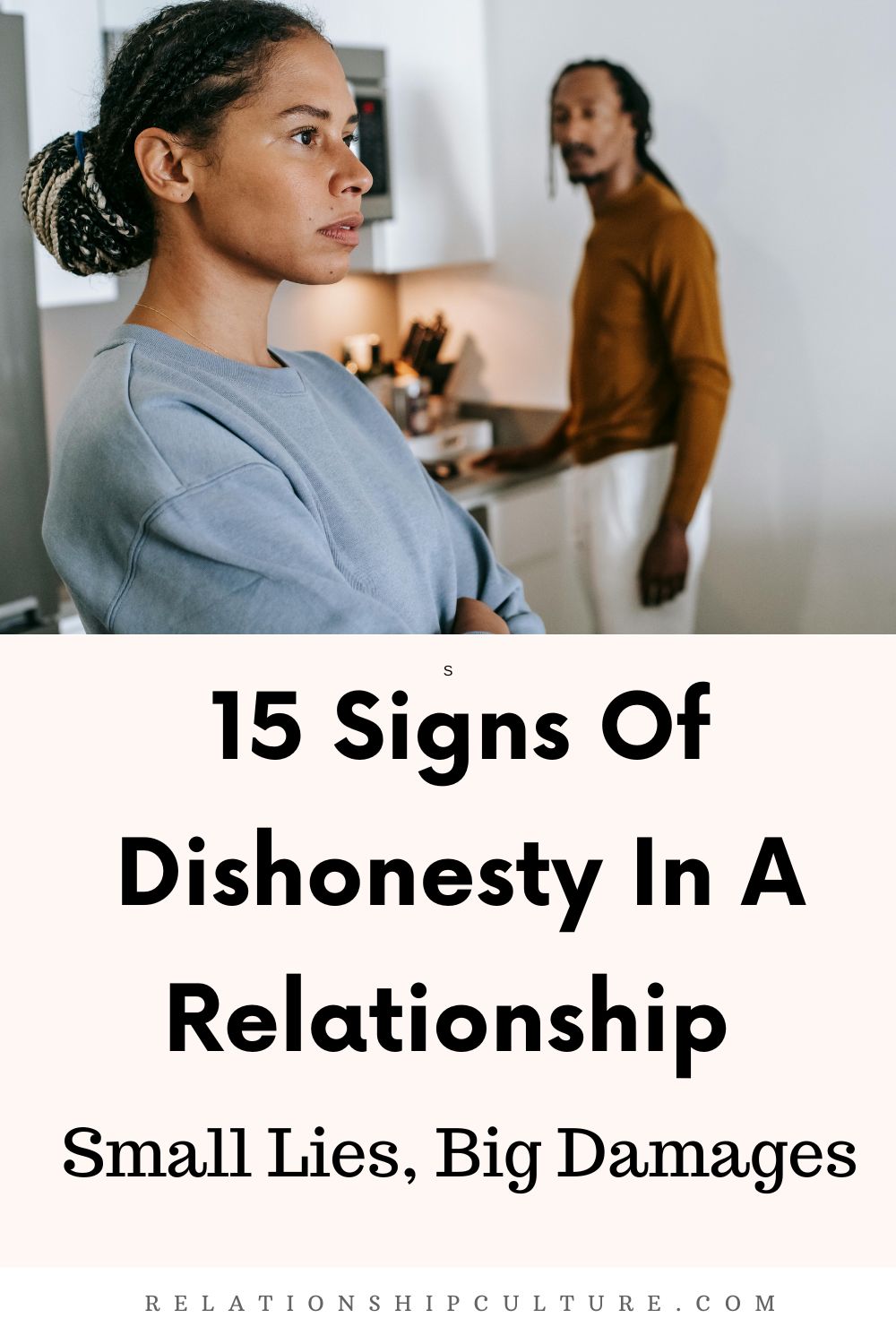
One of the major signs of dishonesty in a relationship is keeping secrets. As a couple, you are individually entitled to your secrets and personal lives. However, when a secret can affect the health and growth of your relationship, it becomes worrisome.
Keeping a huge secret from your partner is like waiting for the bar to drop. And when it does, it’s usually never pretty. Secrets have the ability to cause a rift and destroy the trust in a relationship. It’s better to be honest with your partner.
Keeping a big secret can affect the longevity and health of your relationship. Healthy relationships are characterized by transparency, love, and respect, after all. So, a partner who loves and respects you will not keep big secrets away from you.
2. Telling Half-Truths
Telling a half-truth doesn’t make it the truth! This is another form of dishonesty you must look out for in your relationship. Sometimes, a partner may only share what is considered a half-truth. A half-truth may not be a complete lie, but it isn’t the truth.
When half-truths are shared, it allows for more dishonesty. For example, imagine a partner who buys a new car and informs their significant other about it but fails to say where the money came from. And the money came from some bad dealings.
Did the partner disclose about the car? Absolutely. However, they failed to share where they got the money from, which will clearly be an issue in the near future since it was received from bad dealings.
That is how half-truths are told in relationships. People do so because they believe they’re doing their partner a favor. “What she doesn’t know won’t hurt her,” and “If I don’t tell him, he’ll never know.”
These are all bad and will only lead to disaster at the end of the day. So, if you’ve noticed your partner may only be spilling half the truth, confront them in a gentle and calm manner.
3. Excessive Apologies
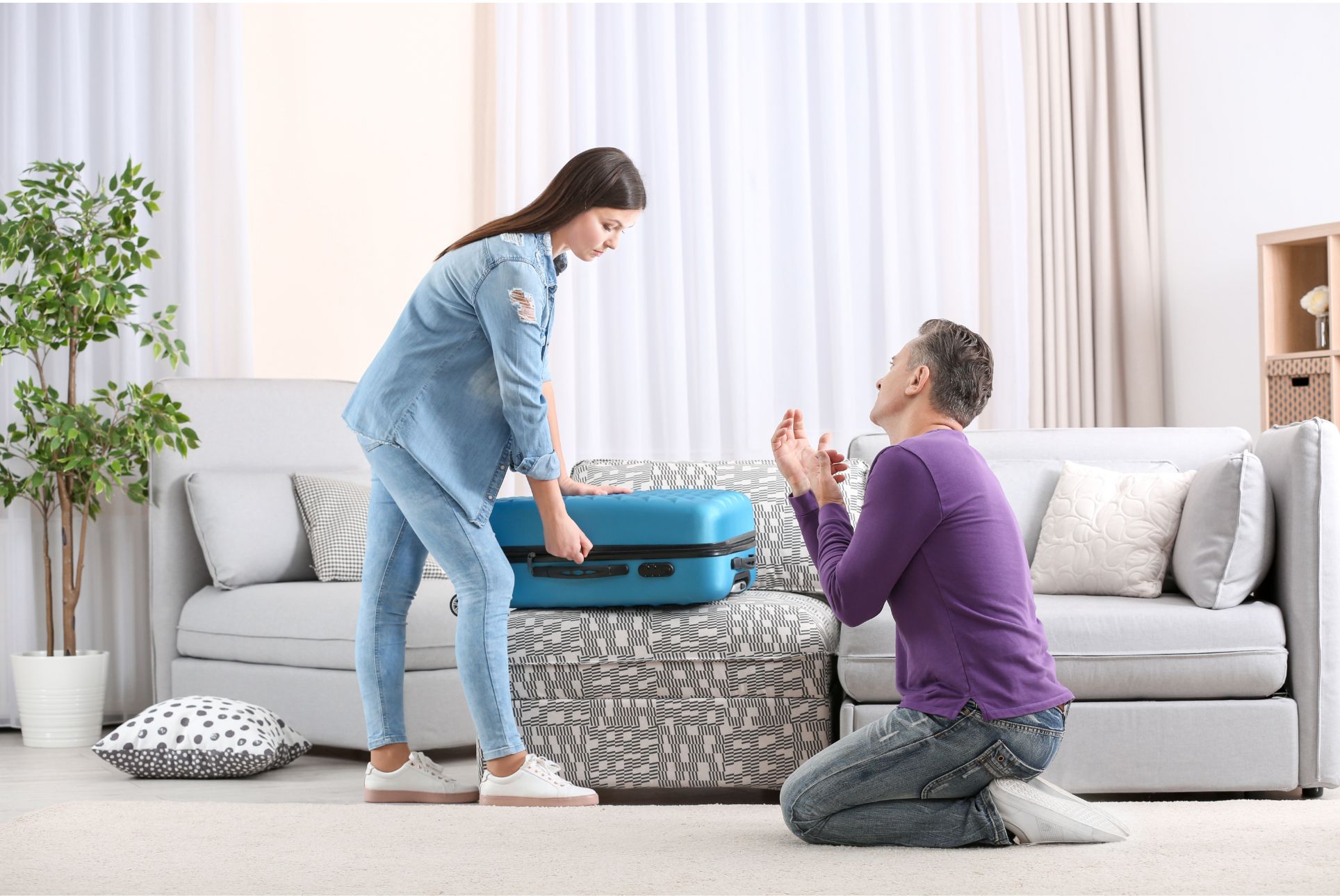
Excessive apologies can indicate dishonesty in a relationship. When someone constantly apologizes, it means they’ve committed something wrong that requires an apology.
Apologies are natural in every relationship. No one is perfect, and mistakes will be made occasionally. However, if your partner is seemingly always apologizing for things they did, it’s one of the signs of dishonesty in a relationship.
They know they’ve done something wrong, yet they constantly apologize because the tendency for them to repeat it is high.
Sometimes, you might not even be aware of why they’re apologizing! When they keep apologizing, and you aren’t sure what they did, this is the perfect time to ask and talk about it.
4. Passwords
It’s natural for individuals to password-protect their phones to prevent viruses and other phishing attacks. It’s also normal to know your partner’s passwords. Even friends share their passwords with each other.
But, if your partner suddenly changes their password or suddenly adds a password and refuses to tell you, something is wrong.
Aside from using passwords to protect vital information from hackers and scammers, passwords are also used to hide personal conversations and information from people around. Your partner may have information to hide and doesn’t want you to find out about it.
This behavior is a characteristic of an inconsistent partner and one of the signs of dishonesty in a relationship. Transparency is key in every relationship and is a way of promoting trust. When this transparency is lacking in the handling of digital devices, then it’s time to be wary.
5. Growing Distance
As couples grow, fondness may reduce over time. When I say fondness reduces, I don’t mean in the sense that they start to hate each other. Rather, I mean it in the sense that the initial spark at the start of the relationship fades over time. This can, in turn, cause a bit of distance between a couple.
There are many reasons why a couple may grow distant over time, one of which is dishonesty. Dishonesty causes a rift that can separate couples. Ideally, the goal of every relationship is to grow together and not apart.
When this starts happening, it becomes an example of the clear signs of dishonesty in a relationship.
It’s essential to address the issues and reevaluate the goals of your relationship if you’ve noticed the distance lately. It’s also essential to address every form of dishonesty. This will help you make good decisions about the future of your relationship.
6. Anxiety
One of the clear signs of dishonesty in a relationship is anxiety. You can tell if your partner has been dishonest from their behavior and mannerisms. They feel guilty, and this will bleed into their overall countenance.
Some signs of anxiety to look for include fidgety behavior, paranoia, wariness, unsteady hands, and stuttering.
These behaviors all show that something is clearly not right. To understand why your partner is in such a state, you must confront them and hear what they say.
7. Lack Of Accountability
A lack of accountability leads to dishonesty and inconsistent behavior. When a partner lacks accountability, they can’t be intentional about how they love you. As individuals, we should always be ready to be held accountable for our actions.
Call an ace an ace, and call a spade a spade. A dishonest partner will never take accountability for their actions because they don’t see the importance.
8. Hiding Conversations

You can spot signs of dishonesty in a relationship when certain behaviors come to light. A good example of such behavior is hiding conversations. A partner who hides their conversations with other people is clearly having conversations they don’t want you to know about.
You might notice they hide their conversations by archiving them or even going as far as deleting conversations. They will become extra secretive with gadgets, ensuring no traces are left behind.
They will also take calls in secret, in places where you can’t listen. The reason for doing this can stem from anything such as cheating, lying, manipulating finances, and stealing.
If you’ve noticed your partner has a penchant for hiding conversations or taking secret calls, something is up. They also don’t want you to be aware of that, and that is dishonesty right there.
You have to stand up for yourself and have a conversation with your partner about how their actions make you feel. Remember to be calm and collected when you do so.
9. Lack Of Commitment
A lack of commitment is often one of the first signs of dishonesty in a relationship. When partners enter into a relationship, they do so by unspoken or spoken agreement to be emotionally and physically available to one another.
Dishonest partners will shrink away from this responsibility by dodging important conversations or avoiding decisions that require mutual commitment.
That can make the other person feel demeaned or insecure about the future of the relationship. Not being consistently present emotionally or during the big moments in life is the signature of someone who is not committed.
Therefore, the lack of commitment manifests in the things that they will end up doing.
Your partner may frequently cancel their plans or simply not make the relationship a priority if other things come up. This lack of commitment signals that they’re not invested in the future of the relationship.
10. Sneaking Around
Sneaking around is one of the clearest signs of dishonesty in a relationship, yet it can be easy to miss when you’re emotionally involved. A dishonest partner will sneak around, hoping you don’t catch on. This secretive behavior creates an atmosphere of suspicion and unease, leaving you in the dark.
The worst thing about sneaking around is the extent of the lie that is being told. A cheating partner may often remain deceitful about where they have been, with whom, and what they have been doing.
They become touchy or evasive when simple questions are asked, making it hard for you to get a clear answer. Such an extent of secrecy is emotionally draining.
Being constantly lied to or kept in the dark by a partner can spiral into a hard-to-break cycle. Unless transparency and open communication are prioritized, the relationship is well on its way toward a self-fulfilling breakdown.
11. Defensiveness
Partners who are dishonest in a relationship tend to get very defensive about their actions. They will deny being dishonest and try to make you feel bad about questioning them.
I once dated someone who would get very defensive whenever I asked him what he was doing out late at night! He would get all defensive and say I had no trust in him. Two months later, I discovered he was cheating!
When dishonest partners get defensive, it’s their way of trying to throw you off their trail. It’s also a way of gaslighting you into believing you’re the bad person for questioning them.
Gaslighting is a manipulation term used by manipulators to make someone feel they’re overreacting to a certain situation. It’s a cruel tactic that can be used by a partner to make you believe things that aren’t true.
If you’ve noticed your partner gets very defensive whenever asked certain questions, there’s a high possibility they’re hiding something from you and don’t want you to find out. It’s important to address this issue by confronting them. Remember to keep it cool and level-headed as you do so!
12. Manipulation
Manipulation is a tactic often used by dishonest partners to maintain control and keep you in the dark. You can spot signs of dishonesty in a relationship when your partner is manipulative.
A manipulative partner will go out of their way to twist facts or create false narratives to mislead you, making it hard to see the truth.
They may craft stories that make you doubt your instincts or convince you you’re overreacting when you question their behavior. Manipulation can be subtle, but its effects are significant, leaving you feeling confused, anxious, and uncertain about the relationship.
Dishonest partners may also use emotional manipulation to play on your feelings of loyalty or love. In college, I dated a man who would always blame his bad moods on me. I started feeling bad and would avoid confronting him about some of his dishonesty. It was years later I realized just how much he truly played me.
You can see this in many other aspects. For example, they might guilt-trip you into overlooking their dishonesty by claiming they’re going through a tough time or shifting the blame onto you.
This tactic is designed to make you question yourself rather than their behavior, keeping you from confronting the real issue. In the end, manipulation serves to maintain their control over the situation, ensuring that their dishonesty remains hidden.
The problem with manipulation is that it eats away at the foundation of trust in the relationship. When someone manipulates you, they’re prioritizing their own agenda over your emotional well-being.
This behavior is a red flag that indicates deeper issues within the relationship, and if left unchecked, it can lead to a toxic dynamic where trust and honesty are completely ruined.
13. No Respect
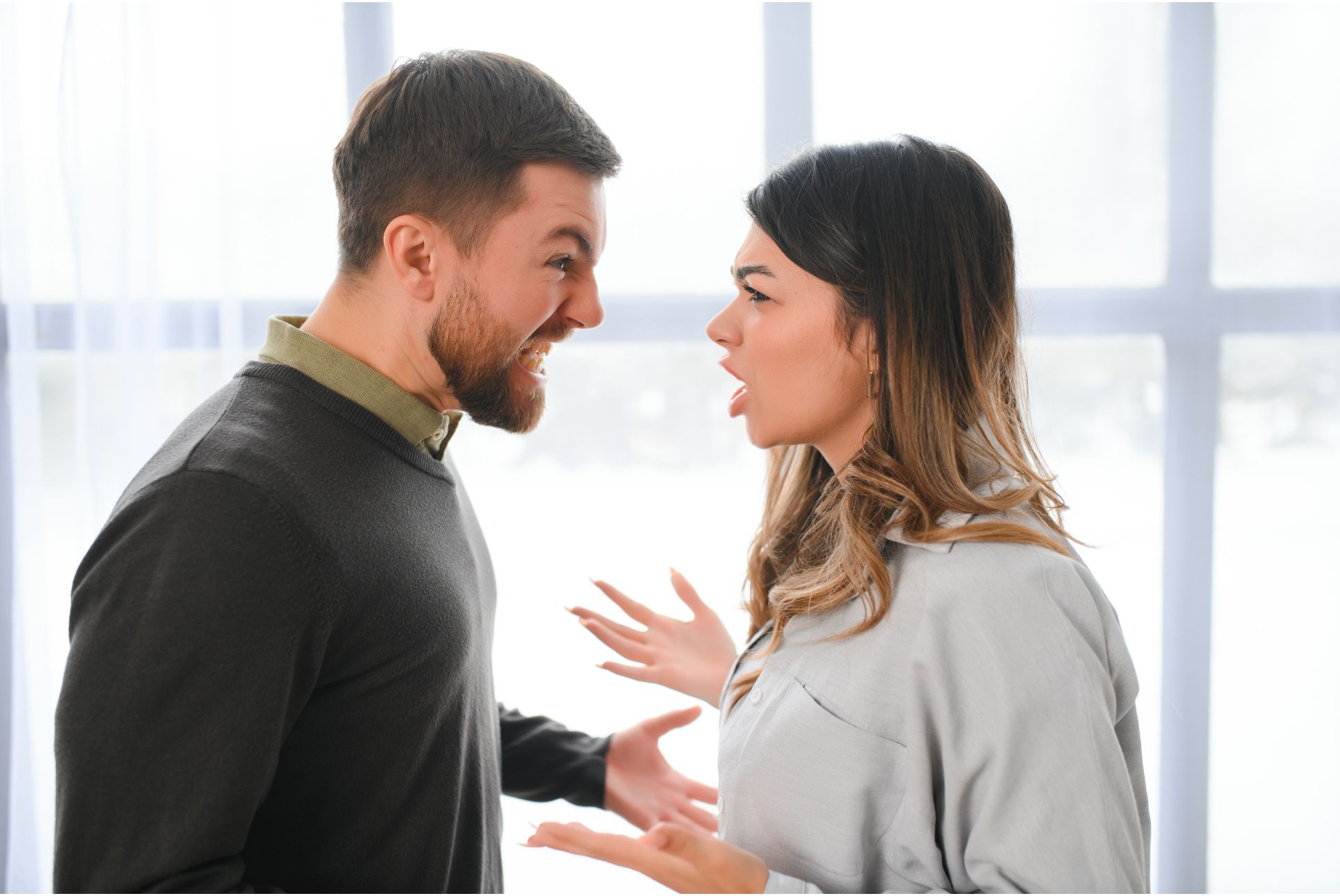
Any relationship in which dishonesty is present is marked predominantly by a lack of respect. When a partner is dishonest, it clearly means that they do not value or respect you as much as they should. If they respect you, they just won’t lie to you!
Respect is at the heart of any healthy relationship; without respect, the bond of two people can quickly go awry.
If someone lies to you, that person is proving that they don’t value you enough to be truthful with you, and such an attitude raises real questions about their investment in the relationship. Apparent dishonesty is disrespect, not only to you but also to the very relationship.
A partner who respects you will always feel obliged to be honest, even when situations get tough. Honesty is respect because it means they value you enough to be real with you, even when the truth may be hard to hear.
When a partner is dishonest, it’s an apparent lack of regard for your emotions and trust, showing you mean little or nothing. Take this as one of those clear signs of dishonesty in a relationship.
14. Avoid Future Talk
Avoiding discussions about the future indicates dishonesty in a relationship. It’s a big red flag when your partner purposely avoids discussing your future as a couple. It shows that they don’t care about your future together. In essence, they’re indifferent about it.
Their dishonesty propels them to not care about the future because, unlike you, they don’t see longevity. It’s possible they’re simply there for the now, rather than long term. So, one of the signs of dishonesty in a relationship is avoidance of the future.
If you bring up conversations about the future, they will either ignore it or purposely redirect the conversation and change the topic. My friend discovered her man had been involved in some illegal financial activities when he kept avoiding talking about their wedding!
This behavior is detrimental because it means that you and your partner don’t have the same goals for the relationship. Not having the same goals for the relationship is already a recipe for disaster.
If they truly love and cherish you, they will want a future with you. It’s important you address this issue by grabbing the bull by the horns, not literally. However, talk to your partner, explain how you feel about the situation, and hear their side.
15. Hesitant Behavior
A dishonest partner is never truly at peace. They’re most likely wrought by the fear of being caught, which translates into their actions around you. When you’re up to no good, fidgeting around people is normal. The same goes for a dishonest partner.
They may link and unlink their fingers often, bite their lips, pace frantically, avoid eye contact, and stare at their devices for long hours. All these signs show that they are clearly uncomfortable and hiding something.
Hesitant behavior is one of those key signs of dishonesty in a relationship. If you’ve noticed some of these signs, you can address them by conversing with your partner and hashing things out.
Signs Of Deception In A Relationship
Deception always has a way of eventually showing its head. There are countless signs of deception in a relationship. Let’s discuss them below:
1. They answer calls privately: When a partner is deceptive, they will answer calls in private. They can’t make calls around their partner because they have something to hide and don’t want to be caught.
2. They don’t share location: They are tight-lipped with their whereabouts. There’s nothing wrong with sharing your location with your partner. It helps you know your partner’s whereabouts and stay connected with them. But when a partner willingly refuses to share their location, it shows they are likely up to no good.
3. They often start quarrels: When dishonesty seeps into a relationship, it turns sour. The dishonest partner often starts quarrels out of nothing, leading to constant fights and arguments. The hostility and need to start fights stems from the guilt of being dishonest.
4. They get defensive: A dishonest partner easily gets defensive. They don’t want to be caught in their lies and will fight tooth and nail to avoid being proven wrong. Confronting a partner and experiencing sudden defensiveness can be one of the signs of dishonesty in a relationship.
5. They never share details: Trying to get details from a dishonest partner is akin to pleading and begging. They’re never ready to share details because they don’t want to share too much, which will have them outed.
Signs He Is Lying When Confronted
When a man is lying, there are certain signs to take note of. First and foremost, he might try to avoid eye contact. This is one of the characteristic signs of dishonesty in a relationship when confronting a partner who has been lying.
Eyes are windows to the soul, and the fear of you learning about their dishonesty doesn’t allow them to look you in the eyes.
Next, they will make up a lot of excuses. When you confront him, he might come up with what seems to be a great explanation without any loopholes. There’s also always someone else to blame for whatever happened. This is a clear sign of dishonesty. A lying partner will not own up to their mistakes so easily.
He never takes responsibility. A man who can’t own and speak the truth can’t be responsible either. A relationship is a dance of tango where two people have to be actively involved. However, with a lying partner, the tendency is high for him to be irresponsible and never take corrections.
Finally, a lying partner will hide his device and gadgets in a ploy to throw you off his radar. He may delete chats and clear call logs so you don’t suspect anything. This is a clear sign of dishonesty in a relationship.
Lying Husband Signs
When a husband starts lying, there are usually very telling, subtle signs that give it out. One of the first signs could be when his stories are inconsistent. If there is always a change or something that doesn’t add up for every explanation he gives for his whereabouts and activities, then it can be a sure case of lying.
Another common sign that could happen is a sudden rise in secrecy. A lying husband may start being overly protective of his phone or computer, changing passwords, or getting defensive if you try to take a peek.
This, once more, is a form of secrecy to shield from things he does not want you to discover whatever he is hiding. Moreover, you may notice changes in his body language, such as avoiding eye contact, fidgeting, or discomfort when discussing something.
A cheating husband would, in the end, shift the blame to you in order to cast off suspicion. He will even call you jealous or paranoid just to take the focus off himself. This is one way of emotionally manipulating you to doubt your instincts.
Signs Of Dishonesty In A Relationship

Deceitfulness in a relationship usually occurs within the most minute details and even before you may have realized it. The first signs usually involve a change in communication patterns.
A deceitful partner may become more closed and try to avoid deep conversations or be vague if you ask about his or her day or future plans. They may also start avoiding the discussion of things that might have otherwise been normal and ordinary.
The other major indicator is a full-blown development of secrecy. Your partner can suddenly begin concealing sections of their life, like protecting their phone or lying about where they have been. More often than not, this secretiveness means they are hiding something.
Finally, most dishonesty is accompanied by changes in behavior that no longer resemble the character of the person that you know. Mood swings, unexplained absences, and a new interest in hobbies or friendships are very common.
When such signs continue to appear regularly, it is time to discuss them with your partner because dishonesty undermines trust and weakens a relationship’s foundation.
Conclusion
There are many ways to spot dishonesty in a relationship, including half-truths, password protection, manipulation, lack of commitment, and the absence of respect. These are just a few signs of dishonesty to note.
Remember, to address these issues, you need to meet your partner head-on and discuss them calmly and gently.