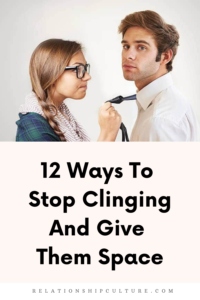
Clinginess isn’t abnormal. Especially when your relationship is still in its honeymoon phase, and all you want to do is be around your partner. Although, it’s also understandable to want to take a chill pill and cut down on that constant need. Your partner may also get tired of the clinginess! So, how can you stop being clingy?
Knowing you’re clingy is already a step in the right direction! So, to understand how to stop being clingy, you have to become busy, try solo activities, work on your confidence, be consistent with change, and work on your self-esteem.
While clingy behavior isn’t the end of the world, it can negatively affect your relationship.
It’s possible for your partner to feel choked and pressured when you’re around. You may also lose your sense of self because your identity is merged with your partner’s. Which is why it’s important we discuss how to stop being clingy.

1. Become Busy
Learning how to stop being clingy requires you to become busy! When you’re busy, you don’t have as much time on your hands to be clingy and obsessive. Instead, you’re focusing on whatever tasks you have at the end. Be it work, a fun activity, or even house chores– get busy! The idea is that you’re occupied both physically and mentally.
You want to be busy in a healthy way that shows that you have things going on for you and are prioritizing those things. Now, this doesn’t mean you will neglect your partner. It’s just about setting boundaries, creating a list of priorities, and deciding what you should give priority to at different times. It means your partner shouldn’t be the only one on your priority list.
Personally, I was quite clingy myself, I wanted to be in my partner’s skin if I could, I would become an emotional mess anytime I couldn’t be with him and even in public places with friends, I unintentionally sort him out, and while that’s something to ‘awwwnn’ about, I started losing my individuality, which isn’t a good thing, so I sort out solutions myself, tried them and found a balance.
So, get busy and focus on other aspects of your life. You’ll discover new things about yourself and even have fun. Your partner will appreciate this space that you have given them and even learn to appreciate and miss you more.
2. Try Out Solo Activities
Solo activities can uplift your personality and prevent you from being so clingy! It’s like rediscovering an old part of you that makes you feel alive. Trying out activities is a great way to promote your sense of self and individuality. One of the habits I picked up that aided a healthy balance was trying solo activities like dancing and pottery. It helped me develop my sense of self again.
It’s a way of saying, “Hey, I’m still my own person.” As much as you are one part of a relationship, it’s also important that you maintain that aspect of yourself. Take part in activities you love, and don’t be afraid to try out new things occasionally.
When you lose yourself in a relationship, you become clingy because all you can think of about yourself is you with your partner and not just you as a person with your unique identity. This doesn’t mean that you should only think of yourself, but you should definitely give yourself that ‘me’ time.
You could go on a solo picnic, go to the cinema, or learn something new. You should also remember the things you love about yourself. This will help you figure out activities to try. And, of course, this is self-care at its peak. It will definitely help you learn how to stop being clingy!
3. Build Your Confidence

Be so confident that no one can shatter your confidence. Being confident in a relationship means you can stand by yourself without feeling the need to lean on your partner at every slight inconvenience. You want to become so confident that even your partner draws confidence from you. As I’ve said before, clinginess can result from fear: fear of abandonment, fear of being alone, and even fear of failure. This fear can make you hide behind your partner and cling to their shadow.
When you are confident, it will radiate all over you from head to toe. Everything about you, from your appearance and your mannerisms to your personality, will glow. You will be able to leave your partner’s shadow and stand beside them rather than behind them. Remember, it’s always important to be cautious of how confident you get and measure how well you are doing.
4. Talk It Out
Sometimes, we don’t even know we’re being clingy! Clinginess often stems from attachment issues and fear of abandonment. It’s important that you let your partner know exactly why you are clingy and what you can do to fix it. I had to let my partner into my mind to understand how I felt.
Before going to meet your partner, you should introspect. Before letting my partner know how I felt, I did a lot of thinking! Sit down and think about the reasons why you might be clingy. Could it be because of past trauma? Could you have issues to do with your confidence and self-esteem?
It’s important to have some of these answers before you go ahead and talk to your partner so you know exactly what you’re telling them. This way, they know how to help you. And even if you don’t know exactly what you’re saying to them, you have an idea of what you’re telling them, and you give them something to work with. This is how to stop being clingy in an effective way.
5. Be Consistent With Your Change
It’s one thing to promise change, and it’s another to actually affect this change. People don’t know how to stop being clingy because they are not consistent with change. They say they will change but don’t actually make efforts to change. The truth is that change is hard. It won’t be easy to make, but what matters is taking it, a day at a time. It wasn’t easy for me, I had days i fell out, but with discipline, I eventually got it right.
Being consistent with change means working hard and smart toward your goal. Stopping clinginess requires effort. First and foremost, recognize that you have a problem. When you recognize that you have a problem, it becomes easier to figure out a way to solve it.
Next comes the solution. Different problems require different solutions. Could your clinginess be a result of past trauma? If it is, then you need to see a therapist who can guide and help you recover. Once you’ve found the solutions that fit exactly what you’re going through, you can now work on letting go of the attachment. Remember, you must be intentional and conscious about the effort that you’re making.
6. Work On Your Self-Esteem
Building self-esteem is very important, even in a partnership, and it can help you understand how to stop being clingy. Clinginess can occur due to feeling flawed, underwhelmed, and imperfect. These flaws, combined, can make you want to stick close to your partner because you fear them leaving.
Working on your self-esteem will boost your self-confidence, positively affecting how you view yourself and your relationship. Where you see yourself in a good light, you also see the dynamics of your relationship in a good light and don’t feel the need to cling excessively to your partner.
Even if you and your partner don’t work out, you won’t place all the blame on yourself. Rather, you will be mature and truly understand what happened. A person with good self-esteem is confident not only in themselves but also in their partner. This is the big secret to working on clinginess!
7. Hangout With Other Friends

This should go without saying, but you need to make other friends. One of the major reasons many people are clingy in relationships is that the relationship they’re in is all they know. They have centered their lives around their partner and relationship, making it hard to form other connections with people.
This was my issue! I realized I had no friends around me anymore. I had to start building my own friendships and it truly did me a world of good. I now have more people to call my own and that I can always rely on. This is why you may not understand how to stop being clingy. It’s important that you’re regularly hanging out with friends and family while also making new friends.
If you only ever hang out with your partner, you’ll inevitably become glued to them. A great example is the movie called The Blue Lagoon. A boy and a girl got stuck on an island for months after a shipwreck and eventually fell in love because it was only the two of them on the whole island.
Imagine your relationship is on that island, and you and your partner are the only ones there. Without a doubt, over time, you become clingy because they’re the only one that you see and talk to talk to.
Inasmuch as you’re hanging out with other friends, it’s also important to set boundaries. You still have to respect your partnership. Hang out with other friends and keep it simple! This is how to stop being clingy.
8. Respect Boundaries
Boundaries exist in every relationship for a reason, and you need to respect them. Being overly clingy shows that you don’t respect boundaries. When boundaries are constantly disrespected or ignored, they can cause a rift in the relationship.
Respecting your partner’s boundaries means respecting their individuality and autonomy. By respecting their choices, you master how to stop being clingy. Don’t force them to do things they normally wouldn’t and remember to set your boundaries, too.
People often fear boundaries because they feel they are an attempt to drift apart. Boundaries are not meant to keep your partner away from you; they’re just a way of setting limits so that you and your partner can both maintain your sense of self and individuality. So respect your partner’s boundaries and set yours, too. Ensure that your partner respects them, and this will certainly improve the dynamics of your relationship.
9. Place Yourself First When Necessary
Are you struggling with how to stop being clingy? Maybe you’re only scratching the surface and not looking at the deeper issues. One of the major issues is failing to put yourself first when necessary. Your individuality in a relationship cannot be over-emphasized. This might step on a few tails, but you need to put yourself first sometimes.
It’s kind of like redirecting your clinginess from your partner to yourself.
This doesn’t equate to being obsessed and clingy with yourself– that would be weird– but it just means that you are prioritizing yourself a little more than your partner when the occasion calls for it, which is normal in every relationship. It doesn’t mean that your priority is no longer your relationship or you are no longer interested in your partner. It just means that you are learning to love yourself just as much as you love your partner.
You should be willing to place yourself first. Some situations might require you to make decisions that favor you more. As long as it’s not detrimental to your relationship or partner, it’s not the end of the world. At the end of the day, the most important thing is your peace of mind and happiness, which you always need to prioritize!
10. Build Your Independence
The opposite of independence is dependence, which means you cannot exist alone. In this case, it means you depend on your partner for everything. Everything means joy, happiness, and even finances. Don’t get me wrong; being dependent on your partner is not bad. But when you have no independence outside your relationship, it cripples but cripples you and becomes a bad thing. I have been in these shoes all the way. I was so dependent on my partner, I couldn’t decide what clothes to wear without his input!
This lack of independence shows that without your partner, you wouldn’t be able to stand on your own. Understanding how to stop being clingy requires you to work on your independence. Take on solo challenges, fix things around the house you would normally leave to your partner, and try activities that encourage independence.
11. Enjoy Family time

One of the best ways to reduce clinginess is to spend time with family and friends. They are a great source of joy and entertainment and can serve as a healthy distraction from your partner.
Go out with friends and try fun activities with them. Visit your family more and reminisce on old times and childhood memories. Hanging out with your loved ones takes you down memory lane, fills your head with old memories, and helps you create new ones. So go out with your family, laugh with your siblings, and reminisce with your parents.
12. Give Space
Giving your partner space can be heart-wrenching, especially if they specifically asked for it. It may feel like a breakup, or like you’ve been left behind. However, this is for your benefit! When you give your partner space, you learn how to stop being clingy.
You have time to reevaluate and unlearn some bad habits, such as being overly clingy. This helps you understand where your partner is coming from and also shows you respect their boundaries. If they have places to go without you, as long as it isn’t anywhere bad or harmful, support them and encourage them to go.
To make things easier for you, you could also plan your own hangouts at the same time so that you don’t feel too lonely or left behind! This will help reduce the attachment you’ve grown to your partner.
Subheadings:
1. How Do I Stop Being Needy And Clingy?
First and foremost, get busy. Occupying yourself with other work will help you turn your focus away from your partner. Your mind will become occupied with something else, and you won’t have as much time to cling to your partner. Of course, this doesn’t mean you should cut your partner off. It simply means you need to learn balance!
You need to enjoy family time and spend time with your friends. When you’re overly clingy with your partner, you realize that you’ve been neglecting your friends and family for a while. Hit them up, go out on casual activities, and create new memories and moments with them. This will help you reduce your attachment to your partner.
Next, be consistent with your change. The first step in making any change in your life is recognizing that you need that change. Understand that you need to stop being clingy and then walk toward fixing it. You also have to ensure you stick to your plan and regimen.
Finally, build up your confidence. Be confident in yourself that you don’t need to depend on your partner. Confidence plays a huge role in reducing your clinginess with your partner. Be confident in yourself as an individual. You should also be confident in your partner. This will greatly help you reduce how much you cling to your partner.
2. How To Stop Being Clingy In A Marriage?
To stop being clingy in a marriage, focus on developing your sense of independence and self-worth. Start by taking on personal hobbies, friendships, and goals outside of the relationship. This creates a healthy balance and prevents you from being too dependent on your spouse for emotional fulfillment. Trust your partner and allow space for both of you to grow individually.
Open communication is also key. Discuss your feelings with your spouse and express any insecurities you may have. Often, clinginess stems from fear or insecurity. You can gain reassurance and clarity by talking through these emotions, helping you feel more secure in your relationship.
Finally, work on setting boundaries. Understand that it’s healthy to have time apart and that this doesn’t weaken the bond between you. Give your spouse the freedom to enjoy their personal space, and you’ll find that the time you spend together becomes even more meaningful.
3. How To Stop A Clingy Person?
When dealing with a clingy individual, you need to be sensitive and honest. Clear-cut, healthy boundaries must be laid down. They may not even know that they are being clingy. Explain to them softly but firmly how space and independence are two good factors that keep happiness in a relationship. Let them feel they are neither being rejected nor criticized.
Encourage them to invest their energies in their own interests and goals. Guide them to find things they enjoy doing alone or that entertain them so they can earn more independence and not be emotionally dependent on you all the time. This will provide them with a sense of independence and lessen the need for them to always stick to you.
And finally, talk about it. Communication is key. Gently explain how the clinginess has made you feel and let them know that you need space sometimes. Be calm and gentle about it. This, in turn, allows for a healthy balance of time together and apart.
4. How To Stop Being Clingy In A Relationship?
To stop being clingy in a relationship, start by building self-confidence and embracing your individuality. Recognize that you are a whole person outside of your relationship, and invest time in your passions, work, or social life. The more fulfilled you feel independent, the less likely you’ll be to rely on your partner for constant reassurance. This was exactly how I changed my story.
Learn to trust your partner and give them space to pursue their interests. It’s essential to understand that taking time apart can strengthen the relationship, not weaken it. Practice self-awareness by recognizing moments when you feel overly dependent and take a step back to reflect on your emotions.
Focusing on communication is crucial. Talk openly with your partner about your concerns and insecurities, and work together to find ways to address them without being overly dependent. Creating a healthy balance of intimacy and independence will help you feel more secure and reduce clinginess.
5. How To Stop Being A Clingy Girlfriend?
If you’re a clingy girlfriend, first of all, look at where that need for closeness is stemming from. Sometimes, it can be due to insecurity or fear of losing a relationship. Remember how I talked about my clinginess? Well, it was because I was insecure. I was terrified of losing my partner.
Once I was able to pinpoint my issues, I was able to get help and reduce that need to seek constant reassurance. Writing in a journal and talking to a professional therapist really helped me a lot too.
Understand the rediscovery of yourself and how to maintain your independence. Spend time with friends and hobbies and focus on your career. This will help reduce the need to derive emotional satisfaction from your partner.
Finally, open up to your partner concerning your feelings.
Let them know of any insecurities and work on solutions together. Reassurance from your partner will go a long way in making you confident and less clingy.
6. How To Stop Being Clingy In A Long-Distance Relationship
Because of the physical distance, it is easy to be clingy or insecure in a long-distance relationship. You must develop trust and communication to stop being clingy. The most important thing in any relationship is trust, and for long-distance ones, well, you do need even more. Try to remember that just because you two are apart physically does not mean your connection will be weaker.
Keep a fine balance by setting aside regular times to talk but not so frequently as to be over and over again all day or bombarded with messages. Respect to each other’s time and rhythm. While you are not talking to each other, do constructive things independently to enrich your life, such as hobbies, work, or spending time with friends. It will keep you satisfied and lessen the tendency to seek constant attention from your partner.
Finally, set clear boundaries and expectations around communication. Discuss how often you’ll communicate and what works best for both. By setting a rhythm and fostering mutual trust, you won’t have to be too needy or clingy yet keep your emotional connection intact despite the distance.
Conclusion:
Accepting that you’re clingy in a relationship isn’t always easy. You just want to be around your partner, which is understandable! However, it can quickly become overwhelming and tiring for your partner, which is why it’s important to change and give your partner space from time to time.
It’s very possible to rid yourself of your clingy traits by focusing on your self-confidence and self-esteem, hanging out with family and friends, and even making new friends. By following these tips, you will become more independent and set the tone for a happy and fulfilling relationship!